

Customer Data Platform (CDP) for Beauty & Personal Care (DTC) across the full customer routine
Most beauty brands know surprisingly little about their own customers. Not because people aren't sharing they are. Skin type, allergies, the full 10-step routine. But that information gets lost somewhere between the quiz tool, the Shopify store, the loyalty app, and the support inbox. Nobody has the whole picture. A CDP fixes that. Every quiz answer, every order, every support ticket connected to one person, in one place, finally useful.
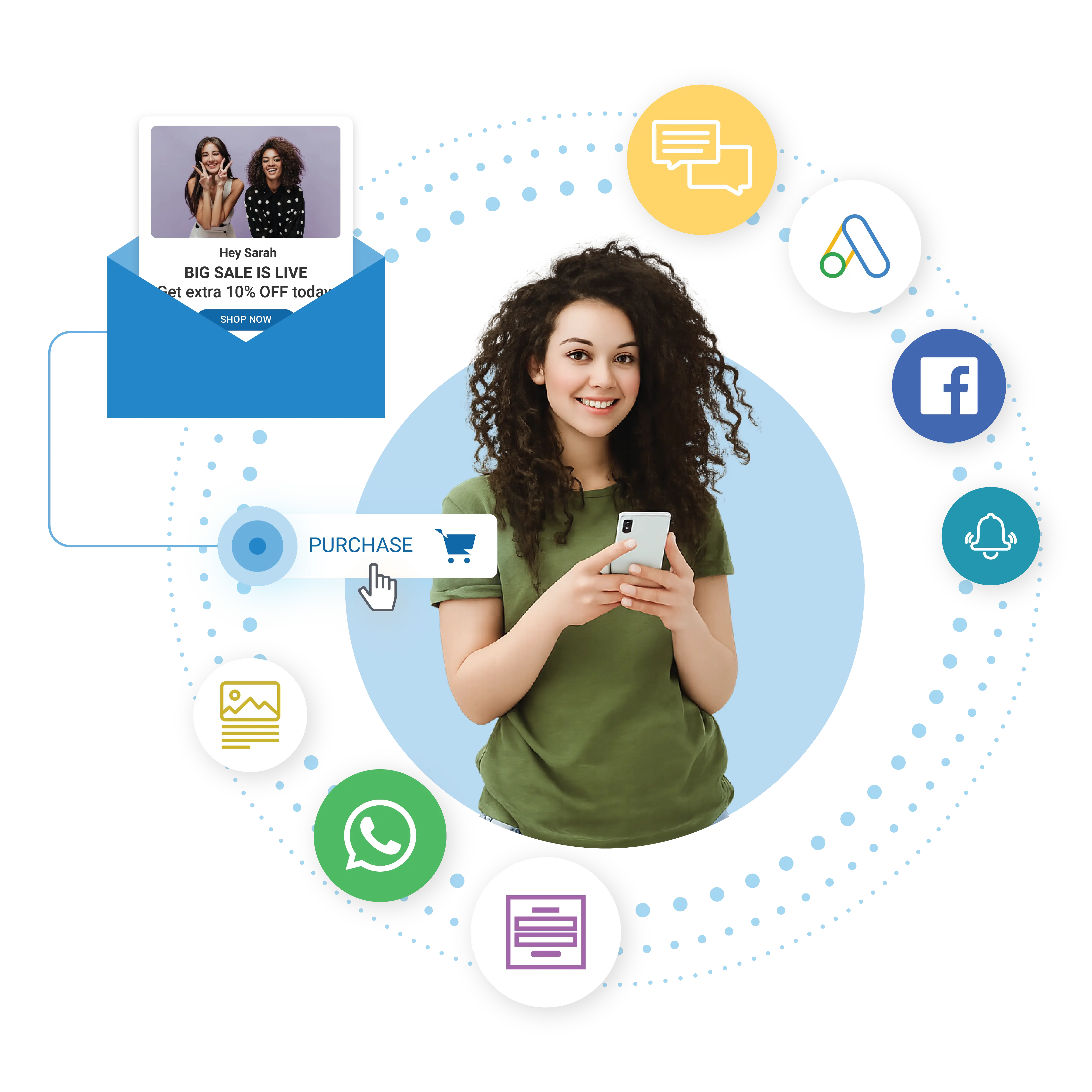
Unified customer and routine profiles
Bring quiz responses, purchase history, browsing behaviour, subscription status, loyalty points, reviews, and support interactions into one connected view per customer.
Real-time behavioural signals
Capture product page visits, ingredient research, abandoned carts, replenishment lapses, and review submissions as they happen, so engagement reflects the current routine and not a snapshot from three months ago
Cross-channel data unification
Connect the Shopify store, skin or hair quiz tool, email and SMS platforms, loyalty system, subscription engine, support desk, and social commerce into one resolved record per customer.
Routine intelligence in context
Turn raw transaction and quiz data into clear signals about routine maturity, replenishment timing, category expansion potential, and switching risk that growth and CRM teams can act on.
Trusted by thousands
Success Quantified
Real results from real customers—measured across ROI, growth and retention
500+
satisfied clients globally
98%
clients satisfaction
5x
ROI for clients
2x
more conversion
Core technology built for the beauty DTC stack
The infrastructure handles the data patterns specific to beauty and personal care: high-frequency repeat purchases, long replenishment cycles, deeply personal product attributes, and the zero-party data that customers volunteer through quizzes and reviews.
Multi-identifier resolution across customer and household
Stitch identities across email, phone, Shopify customer ID, quiz session ID, loyalty number, and subscription account, so the profile holds together when a customer guest-checks-out, returns through a different ad, or shares an account with their household.
Beauty-native data model
Pre-built schemas for skin and hair attributes, routine stages, product categories, ingredients, subscriptions, replenishments, reviews, and loyalty activity mean teams skip months of modelling and start activating data quickly.
Streaming profile updates
A quiz completed at 11pm, a serum reordered three weeks earlier than usual, a one-star review submitted, a tutorial watched on the app — every event flows into the profile within seconds and is available for triggers, segmentation, or CX lookups.
How AI sharpens beauty DTC engagement
Beauty buying is not transactional. It is routine-based, ingredient-sensitive, and shaped by content as much as price. The patterns that drive replenishment timing, category expansion, and lapse risk are too subtle for rule-based logic. This is where models inside a Customer Data Platform (CDP) for Beauty & Personal Care (DTC) earn their place.
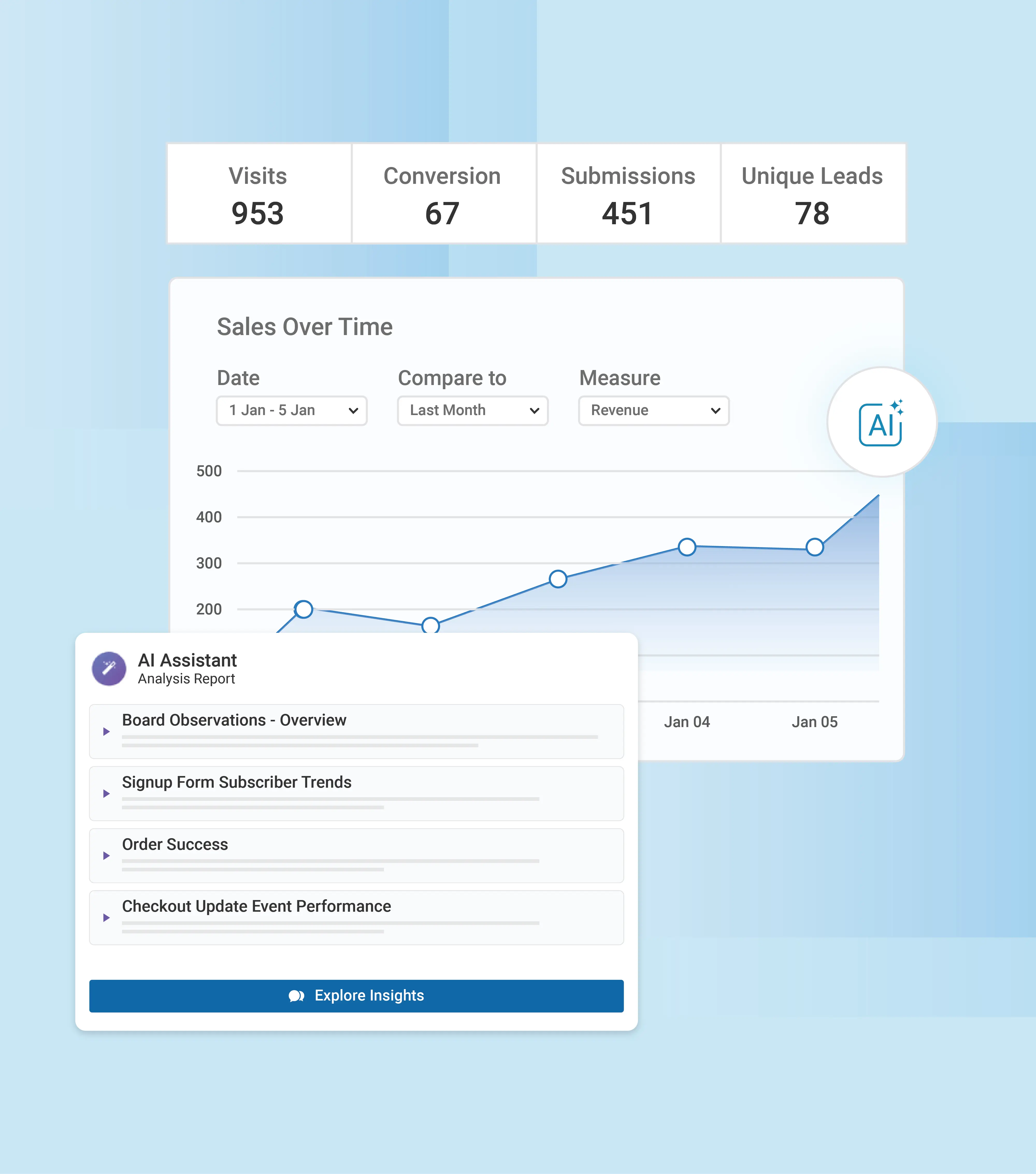
Models learn each customer's actual usage pace from purchase intervals, product size, and routine context, then predict when they are about to run out. Replenishment reminders and bundle offers go out at the moment that matters rather than on a fixed 30-day cycle.
Models learn each customer's actual usage pace from purchase intervals, product size, and routine context, then predict when they are about to run out. Replenishment reminders and bundle offers go out at the moment that matters rather than on a fixed 30-day cycle.
For each customer, AI matches products in the catalogue against their declared concerns, observed purchase behaviour, and ingredients they have shown affinity for, surfacing recommendations that feel genuinely relevant rather than generic best-sellers.
Models score each customer's likelihood to lapse based on session decay, replenishment delay, review sentiment shifts, and reduced quiz or content engagement, so retention teams reach out before the customer migrates to a competitor or marketplace.
Use NVECTA Co-Pilot to ask things like "which subscribers have skipped two consecutive shipments, opened the last three emails, and viewed a competitor brand's launch page" without writing SQL or waiting on the analytics team.
From unified profiles to beauty DTC business impact
A live customer view changes what growth, CRM, retention, and creative teams can do day to day. The gains show up in repeat rate, average order value, subscription retention, and customer LTV.
Recommend the cleanser that fits the moisturiser they already use, the eye cream that complements their existing serum, or the shade range that matches their declared undertone. Every cross-sell starts from what the customer actually has on the shelf.
Reach subscribers with the right intervention — a flavour or scent variant, a pause-instead-of-cancel offer, a routine consultation — based on their actual usage signals rather than generic save-the-cancel scripts.
Trigger win-back flows based on what the customer actually liked: the ingredient they kept buying, the content they engaged with, the season they tend to reactivate in. Discount-only blasts get replaced by flows that read like the brand remembered them.
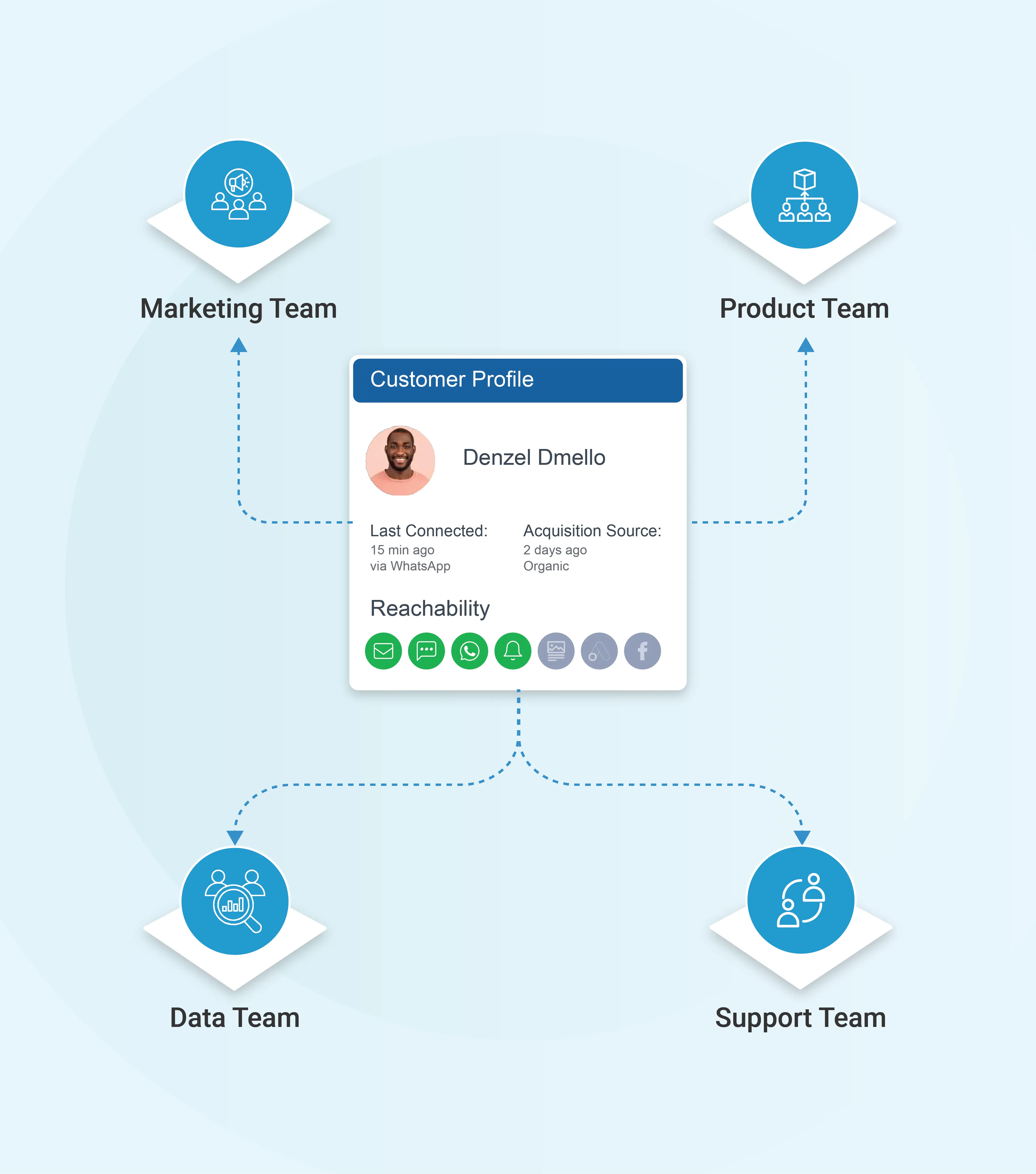
Give performance marketers, lifecycle CRM, support agents, and creator partnership teams access to the same customer view, so a customer who just complained about an order does not get retargeted with the same product the next day.
From unified profiles to beauty DTC business impact
A live customer view changes what growth, CRM, retention, and creative teams can do day to day. The gains show up in repeat rate, average order value, subscription retention, and customer LTV.
Recommend the cleanser that fits the moisturiser they already use, the eye cream that complements their existing serum, or the shade range that matches their declared undertone. Every cross-sell starts from what the customer actually has on the shelf.
Reach subscribers with the right intervention — a flavour or scent variant, a pause-instead-of-cancel offer, a routine consultation — based on their actual usage signals rather than generic save-the-cancel scripts.
Trigger win-back flows based on what the customer actually liked: the ingredient they kept buying, the content they engaged with, the season they tend to reactivate in. Discount-only blasts get replaced by flows that read like the brand remembered them.
Give performance marketers, lifecycle CRM, support agents, and creator partnership teams access to the same customer view, so a customer who just complained about an order does not get retargeted with the same product the next day.
First-party and zero-party data unification
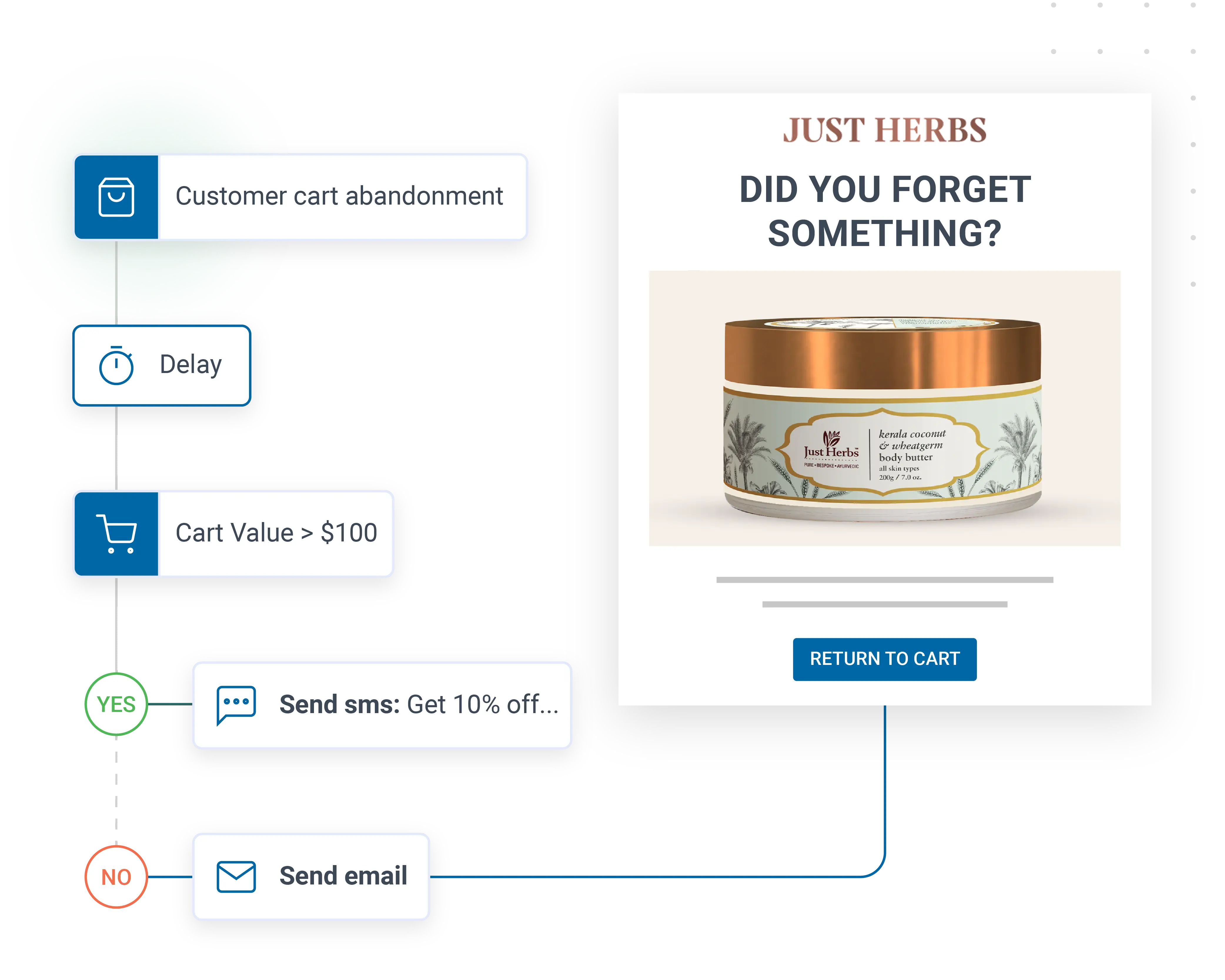
Beauty DTC has an advantage few other categories have at this scale. Customers willingly share skin types, hair concerns, allergies, undertones, scent preferences, and full routines through quizzes, shade finders, and skin diagnostics. This zero-party data is the gold layer that powers genuinely personal experiences. The platform unifies it with first-party transaction, browsing, and engagement data into a single profile, so a quiz answer captured in week one shapes the email sent in week eight, the replenishment reminder in month three, and the new product launch invitation in year two. No more zero-party data sitting in a quiz tool that the email platform never reads.
First-party and zero-party data unification
Beauty DTC has an advantage few other categories have at this scale. Customers willingly share skin types, hair concerns, allergies, undertones, scent preferences, and full routines through quizzes, shade finders, and skin diagnostics. This zero-party data is the gold layer that powers genuinely personal experiences. The platform unifies it with first-party transaction, browsing, and engagement data into a single profile, so a quiz answer captured in week one shapes the email sent in week eight, the replenishment reminder in month three, and the new product launch invitation in year two. No more zero-party data sitting in a quiz tool that the email platform never reads.
Subscription, replenishment, and routine-based engagement
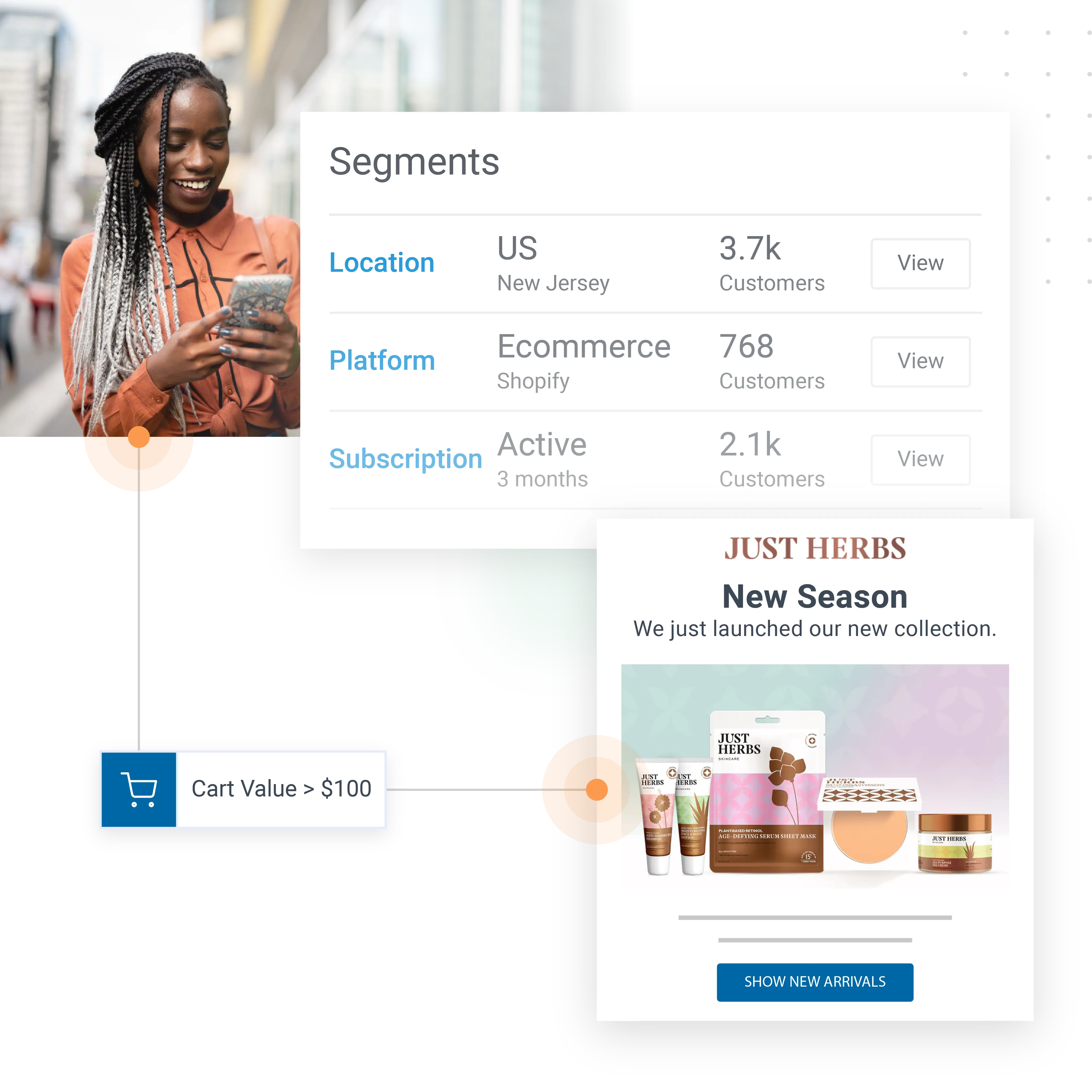
Beauty buying runs on rhythm. A daily moisturiser empties in 60 days, a serum in 90, a shampoo bottle in 45, a fragrance in six months. A Customer Data Platform (CDP) for Beauty & Personal Care (DTC) models each customer's routine as a set of products with usage cycles, so engagement workflows run on real timing rather than calendar guesses. Subscription pause and skip flows respect actual remaining inventory. Replenishment reminders fire when the bottle is genuinely close to empty. Routine expansion offers — a SPF for an existing serum routine, a leave-in conditioner for an existing wash routine — get triggered when the customer's behaviour suggests they are ready, not when a campaign calendar happens to be sending.
Subscription, replenishment, and routine-based engagement
Beauty buying runs on rhythm. A daily moisturiser empties in 60 days, a serum in 90, a shampoo bottle in 45, a fragrance in six months. A Customer Data Platform (CDP) for Beauty & Personal Care (DTC) models each customer's routine as a set of products with usage cycles, so engagement workflows run on real timing rather than calendar guesses. Subscription pause and skip flows respect actual remaining inventory. Replenishment reminders fire when the bottle is genuinely close to empty. Routine expansion offers — a SPF for an existing serum routine, a leave-in conditioner for an existing wash routine — get triggered when the customer's behaviour suggests they are ready, not when a campaign calendar happens to be sending.
Your data remains in your control
Trusted by teams worldwide
NVECTA operates without duplicating or storing your data. Instead, we securely read directly from your existing data warehouse—so your data stays safe and untouched.



Seamless Integrations. Enterprise Ready
Connect your data, systems, and tools through 100+ reliable integrations, built to unify your stack and scale with your business.
FAQ section
It is a platform that unifies customer data from quizzes, the Shopify store, email and SMS platforms, subscription engines, loyalty systems, and support desks into a single live profile per customer. Growth, CRM, and retention teams use this profile to drive personalised cross-sell, replenishment, and win-back without stitching data across tools.
Klaviyo handles email and SMS engagement. Shopify stores transactional data. Neither resolves identity across the quiz tool, subscription engine, loyalty platform, support desk, and ad platforms in real time, nor surfaces zero-party data captured in one tool to drive engagement in another. The CDP sits across the full DTC stack and gives every tool access to the unified profile.
Yes. Guest checkouts, anonymous quiz completions, and email subscribers without purchase history get resolved into the right profile when they convert or identify themselves later, with the full pre-purchase history intact.
Quiz responses, skin diagnostic results, hair assessments, and shade finder outputs are first-class attributes in the profile. Marketing, product, and CX teams use them directly for segmentation, recommendation, and personalisation without exporting from the quiz tool.
Yes. The data model handles single-hero-product brands, full-routine portfolios, multi-brand houses, and curated subscription boxes within the same profile structure.
By predicting skip and cancel risk early, surfacing the right intervention based on customer-specific usage and engagement signals, and respecting the actual replenishment cycle rather than running blanket save flows.
Yes. UGC engagement, creator-attributed purchases, social ad clicks, and influencer code redemptions are part of the standard data model, so growth teams can attribute, optimise, and personalise across the social and creator stack
Consent capture per channel and per category, sensitive attribute handling for skin and health concerns, regional data residency, and audit logs are built into the platform. It aligns with GDPR, CCPA, the Indian DPDP Act, and regional health and beauty advertising regulations.
Ready to transform your workflow?
Ready to unify your customer data and deliver personalized experiences?